Sunday, November 21, 2010

Dalai Lama Signals His Retirement

The Dalai Lama has directly stated that he intends to retire "within the next six months," and also speculated about the possibility of "some kind of deputy Dalai Lama or something. I do not know what kind of appropriate name. I do not know... someone carrying my sort of work."

The story is running in the Economic Times of India, based on a recent broadcast interview.

Stumble Upon Toolbar

Friday, November 19, 2010

Ava for Example


"Merely by keeping this same tantra with them,
without meditating, they will fall into a state of meditative stability;
without studying, they will understand teachings;
without being taught, they will be familiar with spiritual instruction;
without receiving explanations, they will naturally understand the tantras;
and without practicing the stage of development, 
they will behold deities directly."
--The Conjunction of Sun and Moon


Before Ava Lavinia Gardner (1922 - 1990) was Ava Gardner, she was Ava Gardner. Ava Gardner did not have to practice being Ava Gardner. To the contrary, all she had to do was be herself. Since she managed to naturally, effortlessly, and spontaneously be herself, she was that indivisible essence of being referenced by the generally agreed-upon name Ava Gardner.

Whatever qualities, characteristics, legends, or descriptions we wish to ascribe to the being referenced by this name, such qualities, characteristics, legends, or descriptions neither define nor delimit Ava Gardner.

If, for example, you say Ava Gardner was a remarkably beautiful woman, employed as a motion picture actress for the whole of her adult life, who liked to smoke, drink, and roll around on the sheets, you will have missed entirely the equality and purity of Ava Gardner as a natural manifestation of timeless awareness.

If you attempt to apprehend Ava Gardner by comparing her to all those women who are not referenced by the name Ava Gardner -- saying, "This is Ava Gardner," and "This is not Ava Gardner" -- you will be unable to experience the spontaneous presence of Ava Gardner as neither divisible nor indivisible purity.

Similarly, if you say that Ava Gardner engaged in effort in order to become Ava Gardner, i.e. that Ava Gardner was in some fashion the result of such effort -- such effort being viewed in this instance as the "cause" of Ava Gardner -- then the always-abiding Ava Gardner, effortlessly present, will be lost to you.

If you make an offering of your understanding of Ava Gardner to Ava Gardner, then in just this sense haven't you separated yourself from Ava Gardner? More to the point, haven't you divorced yourself from your own unified, essential being-as-inseparable from the basic ground that neither contains nor omits Ava Gardner or you?

If you selectively mine characteristics you have fictitiously attributed to Ava Gardner,  and then use them as a basis of imputation, saying, "Oh, she drinks like Ava Gardner drank," or "She dances like Ava Gardner danced," or "I wish I had Ava Gardner's lips," or "I wish I could have kissed Ava Gardner's lips," then you have imprisoned Ava Gardner in a referential state that directly opposes her actual, empty, non-referential state.

In the West, it seems there is a problem distinguishing between the practice of Buddhism as a graded, inquisitional exercise in dialectics, and the pass-fail, snake-in-bamboo practice of Vajrayana. Since Tibetan teachers have been coming to the West for the past four decades, and the problem still persists, I thought I would forget the whole thing and watch television instead.

There was an old Ava Gardner movie playing, and I watched that for a while.

Some people keep birds in cages. In South-East Asia, you can buy them at temples and set them free. I did that once myself, in Bangkok, only to watch them wheel around in the sky for a few minutes, and come back to the bird sellers, there to be sold again. Actually, the birds and the bird sellers are bodhisattvas, who manifest in this fashion in order to provide the opportunity to create merit. So, this is fictitious merit,  accrued in a fictitious circumstance, dedicated to fictitious beings, and subject to being exhausted.

Remind you of anything?


.

Stumble Upon Toolbar

Thursday, November 18, 2010

Too Cool for School


"Shambala Buddhists pay money to Tibetan witch doctors 
to wave things over their heads." 


Some may wonder why I juxtapose an obscure quotation from Gesar Mukpo with a photograph of Gyatrul Rinpoche. At first blush, it would seem they represent different backgrounds, different traditions, different generations. 

Gesar Mukpo is the formally recognized and enthroned tulku of Jamgon Kongtrul of Sechen, and of course, he is Trungpa Rinpoche's son -- a child of the "Shambala Buddhists," so to speak. He was born and educated in the West, and seems to spend much of his time usefully contemplating that psychopomp of Western culture known as film-making. 

Gyatrul Rinpoche is the formally recognized and enthroned tulku of Rigdzin Kunzang Sherab of Palyul. He was born and educated in the old country, has little if anything to do with the Shambala Buddhists, and although he has lived in the West for over thirty years, has only minimal fluency or interest in Western culture.

Actually, Gesar Mukpo and Gyatrul Rinpoche seem to have much in common -- beyond the obvious, that is. Both have engaged in critical examination of the tulku institution -- one through his documentary film on the subject, and the other through polemics. 

But, whereas Gesar Mukpo's film Tulku is rather well known, and even celebrated, Gyatrul Rinpoche's thoughts on the tulku institution have never achieved much circulation. I think that is a pity. I used to know Gyatrul Rinpoche quite well, and there was a period when we used to spend quite a bit of time in one another's company. Having thus come to some sense of his insight, if you will, I am always pleased to hear his views on any subject under the sun.

The other day, someone sent me a copy of the March 2006, Pacific Region Yeshe Nyingpo Newsletter -- which is the admittedly slender medium where his thoughts were published -- with an anonymous note that read, "Reprint this before it disappears." Seems there is yet another battle raging  somewhere, about what is and isn't, and one or the other partisan would like to use Gyatrul Rinpoche's polemic as ammunition or armor, as the case may be.  After you read this, I don't think you'll want to use it either way; at least, I hope you won't, because it is neither ammunition nor armor, but food -- food for introspective thought.

Actually, we have quoted from this in the past, but we have never reproduced it in its entirety. When I received that note, I went back and re-read the material again. It seemed to me that Gyatrul Rinpoche's thoughts are particularly timely. So, I have decided to re-print them here.

Some people who have read this material have asked, "Well, who is he talking about?" or they have asked, "Why doesn't he just come on out and name the names?" That really isn't Gyatrul Rinpoche's style. On the one hand, he can seem very direct, or outspoken, but he is actually a person of great delicacy and tact. He also expects you to be smart enough to "read between the lines." Thus, when hereinbelow he is openly critical of "Western tulkus who boast about visions," or recounts how he really didn't want to go to Arizona, you can hark back to 2005 and ask yourself who is the only person who fits the description.

However, if you get caught up in the specifics, you might miss the larger issues he addresses. One of these larger issues concerns groups or centers or "sanghas" that don't seem to make very much progress. For example: you see cases where people have been at something for over twenty years, but everybody is still stuck in the same pigeonhole. This seems like it could be a complicated problem, but he gives a very simple diagnosis.


The other interesting issue is the emphasis on training, which he approaches using the example of children who will come to carry the name "tulku" in the future. You know, these days there are people running around who think they are too cool for school. You might think you are a great bodhisattva, and you may even find a small group of people who are willing to call you a great bodhisattva, but you will never find a great bodhisattva who is too cool for school. If you think that's what you heard, you are quite probably mistaken, and sooner or later events will conspire to rather forcefully bring that point home.

His comments on pouring blood into milk are really most useful. These days, it seems there is some sort of imperative to jazz up buddhadharma for the Western audience. You see all sorts of table-pounding about, "We are Western Buddhism," blah, blah, blah. You even see lamas who should know better falling into the trap of jazzing up Dharma to "fit" the West.

Speaking personally, whenever I see that sort of thing, I think of the prostitutes during the Asian wars, who got plastic surgery because they thought it would make them more attractive to the foreign soldiers. So, you saw once-beautiful Asian ladies who had disfigured themselves -- cutting their eyes to appear Caucasian, dyeing their hair blond, or pumping up their chests with implants.

Sometimes, in the glare of the information explosion, when people are "liking" this and "tweeting" that, it even becomes difficult to recognize the line between Dharma and non-Dharma. Fortunately, Patrul Rinpoche gives us a handy rule of thumb, quoting Geshe Tonpa:
"If it counteracts negative emotions, it is Dharma. If it doesn't, it is non-Dharma.
If it doesn't fit with worldly ways, it is Dharma. If it fits, it is non-Dharma.
If it fits with the scriptures and your instructions, it is Dharma. If it doesn't fit, it is non-Dharma.
If it leaves a positive imprint, it is Dharma. If it leaves a negative imprint, it is non-Dharma."
So, in the following, and herewith -- something which I trust will counteract negative emotions, won't fit with worldly ways, will fit with your instructions, and will leave a positive imprint on your thinking. My suggestion is that you read this, and then go make the effort to watch Gesar Mukpo's film. I think if you do, you will be surprised to find how greatly the two stories intertwine. 


-o-o-0-o-o-


"This message from Gyatrul Rinpoche was read to the sangha by Sangye Khandro on the last day of the 2005 Vajrakilaya retreat at Tashi Choling. Rinpoche did not attend the retreat as he was preparing for a month-long trip to China to visit his sisters, whom he had not seen since leaving Tibet 55 years ago.

"I am so grateful to Lingtrul Rinpoche and Pema Tenzin. They always come to our ceremonies, especially to Vajrasattva and Vajrakilaya. Their kindness cannot be repaid. I hope that both of them will always bless us with their presence during these ceremonies in the future. I am also grateful that Lama Yönten participated in our Vajrakilaya practice this year. Lama Yönten is a direct disciple of Kyabje Dudjom Rinpoche. He lived with H.H. Dudjom Rinpoche and his family and learned in the Tersar monasteries in Bhutan and Nepal. While he was here, he taught the students at Tashi Choling how to play the instruments and just how to be good practitioners. In the future, I am hoping that Lama Yönten will continue to be one of our teachers and to help us as he did this year.


"To the entire sangha, including the geku Nick O’Connor and the chopons, I would like to say: please continue to increase your knowledge, your skillful means, your incisive knowledge and your loving kindness so that you will always uphold the Buddha’s doctrine in a very pure way. All disciples should know that we are not here practicing dharma just to dispel obstacles, even though dispelling obstacles is one of the functions of Kilaya practice. The main function of dharma practice is to completely tame and control one’s own mind. If we can do that, we will be able to achieve siddhis. It’s as simple as that. Everything that we hope to achieve in order to accomplish our own purpose and the purpose of others is completely dependent upon taming our own minds. Everyone should always be considering this. In order to become Buddha, to clear all obstructions and increase all indwelling noble qualities, we must tame our minds. 


"Everything is dependent upon refuge. I always repeat this. I want to drive the point home again and again, because people still do not get it. Refuge is the single most important practice. The worst obstacle is not knowing refuge. 


"The proof that refuge is not being understood is that people are not progressing rapidly on the path, because dharma’s methods produce rapid results when they are practiced correctly. 


"A lack of true faith in the objects of refuge comes from not understanding the qualities of the objects of refuge. It’s extremely important to come to know their qualities very well. Then your path will be meaningful. If you keep your refuge vows, then all three vows— pratimoksha, bodhisattva and vajrayana—are subsumed there. 

"Refuge vows contain all three kayas; they contain Buddha’s enlightened body, speech and mind. Generation and completion stage are subsumed in refuge. Refuge also includes the result of all of our efforts to receive empowerment, transmission and upadesha instruction.

"As for the children, you children are my special little fresh sprouts. That’s because your seed is your own little Buddhanature. You must not allow your sprout to be ruined or burned. Parents are responsible for this. Children need to learn dharma as much as possible. They need to cultivate the three wisdoms of listening, contemplating and meditating and parents must be responsible for giving them this opportunity. The rest of the sangha must be responsible to help ensure that the children are learning. In that way everyone will be harmonious. For myself, this is the future. When these children become tulkus, khenpos, translators or lamas, they should never be arrogant or boastful. Everyone must always work to tame his or her own mind. And once again, that’s dependent on how well we hold the vows of refuge.

"These days it’s a very sad time because many people are given dharma names like ‘tulku.’ Then right away they pop up, but they are empty of qualities. There’s nothing more sad than that. So please don’t follow this empty tulku tradition where the demon of godliness is cultivated. That demon of godliness is meant to be eradicated, not encouraged. 
"You are the kings of spiritual materialism, you are the queens of spiritual self-importance. Nothing matters ultimately. Watch it decompose."
 
"Therefore, all disciples must keep samaya. Keeping samaya vows doesn’t mean looking at one another and pointing to see if others are keeping them or not, saying he or she is good, he or she is bad. Of course, all beings are having a hard time keeping samaya, just as you are. That’s because they are wandering in samsara. So rather than faulting and judging them, we must have compassion and love for them continuously.

"Tulkus can really destroy the doctrine, especially these days when they compete with each other for positions, like who sits on the highest seat in the shrine room. It’s a sign of not knowing the dharma at all. Whoever sits on the lowest seat in the shrine room is the one who has the highest qualities. For example, it’s a well-known fact that there’s no owner of the Ganden Tri, the throne of the Ganden. Whoever has the qualities takes the seat on that throne. But these days, lamas and tulkus are fighting over positions.

"That’s the tradition of kings; it’s not the dharma tradition. Buddha Shakyamuni never worried about a throne. Guru Rinpoche never worried about a throne. Our root guru, Kyabje Dudjom Rinpoche, never worried about a throne and in the history of his lineage there’s never any history of anyone fighting over who held the throne or competition about how many tulkus there may be. This has never existed in Dudjom Lingpa and Kyabje Dudjom Rinpoche’s lineage. Usually there are 5 tulkus for body, speech, mind, qualities and enlightened activities. All of these tulkus are busy increasing the doctrine. They’re not thinking, “My monastery’s the seat,” or “I’m the only throne holder.” So don’t take the pure dharma and bless it with demon’s views.

"Think about the future and about keeping the lineage pure. It doesn’t matter if you’re a monk or a ngakpa. You should tame your own mind. That is the main responsibility of dharma practice. And also not breaking samaya. No matter how scholarly you may become, if you don’t have pure samaya, your mind will become like a poisonous snake and you’ll never be a good practitioner. You will only be a reflection.

"In the future, always remember it doesn’t matter what you look like with your dharma clothes on, whether you appear to be handsome, pretty, powerful, even if someone is always praising you. You need to understand that all these ways of thinking about dharma are detrimental because they don’t help you to tame your mind and cultivate compassion for others. So just work on taming your mind and don’t worry about the rest of the stuff. Stay happy with who you are whatever status you have. However much you can tame your mind, that will bring you more happiness.

"Have excellent thoughts toward others and give offerings as much as you can without being proud or boasting. These days people do one good thing and right away they want to tell everyone, pretending they’re so great. There’s never any reason to tell anyone anything when you do something good. They will notice it. It will be conspicuous.

"Remembering that all parent sentient beings are equal to space we should always have love for them and whatever happens, we should always attribute that to the kindness of our root guru and our parents. This is very important, to think that whatever qualities you have are because of your guru’s kindness, not because of yourself. For example, for me, I know that I don’t have any qualities, but because of the kindness of my gurus, I have been able to do something meaningful in my life. I do have confidence in that. But I have never thought that I did this myself. I always thought that it was because of their kindness and their kindness alone that I had this opportunity. That makes me special. That makes me someone who can give the gift of dharma. When I think about myself doing something good, I attribute all the credit to my root gurus. So if you are my friends, then you should do the same. I would expect that of you.

"As for this name tulku, a dog can be called a snow lion. The tulku lineage does not matter any more. Just tame your own minds. That’s the real tulku.

'We’ve worked hard to create this little gompa of Tashi Choling. It’s filled with blessings of body, speech and mind; it’s been blessed by the greatest gurus of our time. So take care of it for the rest of your lives, and take care of one another. And when the lamas die, as they will, for example myself, my corpse, I don’t want anyone making a big deal about my corpse. I don’t want a stupa. I would prefer cremation or giving my body to the birds. Or you could throw it in a river. I really don’t care. Milarepa didn’t care what happened to his body. I would like to be like him. He didn’t need a stupa. A pure Buddhist doesn’t care what happens to the body after death. So please keep that in mind and don’t forget my words. Also, I wanted to say that ordinary dharma practitioners should not have stupas for their bodies.

"Many of you misinterpret what to do with people when they die. You put ordinary practitioners’ pictures on the altar and then make offerings to their pictures. This is really incorrect. You should learn from lamas like Pema Tenzin what should be done when people die. Do not put their pictures on altars. This is not the way. That would cause the deceased person to go to the lower realms. Keep things in the proper context. If I die, please don’t do that. And don’t blow the trumpets either. This is different from Chagdud Tulku Rinpoche. You may say, “Well his students did that for him, shouldn’t we do that for you, Rinpoche?” But Chagdud Tulku and I are very different. Don’t forget that his mother was a great dakini and she would actually pretend to pass away and go into the realms and liberate thousands of beings from the bardos. And Chagdud Tulku’s sister did the same. Chagdud Tulku came from an amazing lineage and he himself was an amazing guru. So of course the way he was treated by his disciples was entirely appropriate. We don’t have to say these things. Everyone knows that.

"Please listen carefully. If we follow Buddha Shakyamuni’s tradition, even though Buddha Shakyamuni lived two thousand five hundred years ago, we don’t need to worry about eight worldly dharma concerns and we can always only practice pure dharma.

"You shouldn’t boast about visions. There are many of these so-called western tulkus and lamas who are busy boasting to their disciples that they had this vision and that vision trying to impress their disciples. This is just worldly concern. I hope none of you will ever do that. Why should you boast? If you’re my friends, in the future you won’t do that.

"Just be harmonious with each other and do your very best and follow the pure tradition, not “my way.” Don’t follow the highway of “my way,” that’s very shameful. That will cover up the pure Buddhist doctrine. And don’t mix the tradition with other things, with your own ideas and your own cultures. Don’t follow cultures for that matter. You don’t need to follow any culture, just the pure Buddhadharma, and nothing ever needs to be changed. It’s so sad when people think they need to adjust Buddha’s speech, like pouring blood into pure milk.

"As for the translators, especially the future translators as I mentioned before, translators are the second lama and all of you really need to respect this. Translators are not just like the postman delivering letters, handing it over. You shouldn’t think like that. In order to become a true translator— and I know many of you are aspiring to do that— you really must accomplish the dharma as a practitioner through listening, contemplating and meditating. Then when you serve, you are really serving. You must be tireless. You shouldn’t be a complainer saying I’m too tired, I’m so busy and ruining your merit. So many westerners are always ruining their merit by complaining right after they do something good. It doesn’t make sense. Why do you always have to complain? Just be tireless.

"For myself, and I don’t mean to boast, the only reason why I went to Arizona was to keep samaya. I didn’t want to go. I went there because I had some samaya commitment that I should go there. It was hard for me to go but I tried to keep that commitment.

"Like that, all of you should always try to keep your samaya no matter how difficult it is. You’re not keeping samaya just for the lama, you’re keeping samaya only for yourself. So please keep this in mind.

"What would we have done if the 25 disciples in Tibet including Beirotsana had not gone through all their hardships to bring the dharma into a language that the Tibetan people could understand? We wouldn’t have the dharma. So you see the importance of this work of bringing dharma now into the English language. It’s entirely dependent upon how the translator can realize that information and present it accurately and correctly. Translating is a skill that must be perfected. It is not just some ordinary job. You can’t just think, I’m going to be a translator, and think that it will be easy to learn to read, or that you can just learn some words and all of a sudden you will start translating. It’s really not quite like that. As a translator, you’re becoming a major servant of the doctrine, spreading the doctrine in a most potent way by bringing it into a language that people can understand. So be very careful and keep your samaya. Otherwise you will be just like a postman. It’s important for all students to respect translators. Encourage one another.

"The sponsors of the dharma should always rejoice if in this lifetime they have an opportunity to be generous. They should try their best to offer with purest intention, skillful means and prajna wisdom. I’m sorry I wasn’t able to come to Kilaya this year. I really had every intention of coming. As you know, I always like to come. And in the future, I’ll be there next time to bug you guys again, especially the children, my children, who are the future seeds, and my shedra students, who better not be hanging out or trying to be slick. I want them all to be like Shashi and Ila and to guard the doctrine. I love those girls and I love these students. They are supporting my life more than anyone.

"I’ll see you all soon when I come back from China and maybe Taiwan. My final word is to keep samaya with the guru. Everyone has that responsibility. Watch yourself and see whether you have pure samaya. Whether someone else is a god or a demon, it really doesn’t matter. Just watch yourself."


.

Stumble Upon Toolbar

Wednesday, November 17, 2010

Of the Dalai Lama, November 17th


On this day, in the last Iron Tiger Year, November 17, 1950, the Dalai Lama was formally installed as the Tibetan Head of State. In Tibetan astrological terms, this circumstance has now occupied a "complete cycle of time." 

OM SVASTI
O our gurus, and your line of lamas, for whom we have the deepest gratitude,
You who are the repository of the three: secret powers of body, speech, and mind of innumerable buddhas,
Who manifest in a miraculous way to each devotee according to his capacity,
To you, who are the wish-fulfilling gems, the source of all virtues and good qualities,
We offer our prayers with intense devotion
That our protector of the great Land of Snows,
Tenzin Gyatso, upholder of the Dharma, the great ocean,
May live for a hundred eons.
Pour on him your blessings
That his aspirations may be fulfilled.
The dharmadhatu, the inexpressible reality that pervades all things like the heavens,
Immaculate, full of great bliss and transcendental wisdom,
Manifests like a cloud the numberless abodes of the higher divinities,
The mandalas of the heavenly beings.
To all the higher forms of the divine ones, the yidams,
We offer our prayers with intense devotion
That Tenzin Gyatso, protector of the great Land of Snows,
May live for a hundred eons.
Pour on him your blessings
That his aspirations may be fulfilled.
O you numberless buddhas of the past, present, and future
Who are the masters of the ten powers and teachers of the gods,
Whose attributes of perfection, free from defilements and born of realization
Are the source of the buddha-activity
That appears for all time in the ocean of the suffering of the world
For the sake of all sentient beings —
To you we offer our prayers with intense devotion
That Tenzin Gyatso, protector of the great Land of Snows,
May live for a hundred eons.
Pour on him your blessings
That his aspirations may be fulfilled.
O sacred Dharmas of the three yanas,
Which liberate us from the sufferings of the three worlds,
Supremely calm, the jewel treasure of the fully enlightened ones,
Without impurities, unchanging, eternally good, the peak of virtues,
To you we offer our prayers with intense devotion
That Tenzin Gyatso, protector of the great Land of Snows,
May live for a hundred eons.
Pour on him your blessings
That his aspirations may be fulfilled.
O all you arya Sangha, awakened and unsullied,
Of highest valour in conquering the suffering of the wheel of life
With the transcendental wisdom that directly intuits the deeper truth,
Never departing from the indestructible vajra abode of nirvana -
To you we offer our prayers with intense devotion
That Tenzin Gyatso, protector of the great Land of Snows,
May live for a hundred eons.
Pour on him your blessings
That his aspirations may be fulfilled.
O you dakas and dakinis, heavenly beings of the three worlds,
Who appear in the highest paradises, the sacred places, the cremation grounds,
Who have innumerable experiences of the bliss of the void,
Supporting the yogis in their meditation on the excellent path,
To you all we offer our prayers with intense devotion
That Tenzin Gyatso, protector of the great Land of Snows,
May live for a hundred eons.
Pour on him your blessings
That his aspirations may be fulfilled.
To the ocean of guardians of the teaching, who possess the eye of transcendental wisdom,
Carrying on their matted locks the knot
Symbolic of the vows they made to Vajradhara Buddha,
The powerful ones who protect the teaching and the upholders of the Dharma -
We offer you our prayers with intense devotion
That Tenzin Gyatso, protector of the great Land of Snows,
May live for a hundred eons.
Pour on him your blessings
That his aspirations may be fulfilled.
To all you guileless ones, in whom we take the excellent refuge,
We pray with intense devotion, humbly, from our very heart,
That by the strength of these verses
Ngawang Losang Tenzin Gyatso,
He who has power over speech, the kindly one,
Upholder of the Dharma, the great ocean,
He who possesses the three secret powers,
May be indestructible, eternal, and without end.
That, seated on the supreme unconquerable throne of the vajra,
He may live for a hundred eons.
Pour on him your blessings
That his aspirations may be fulfilled.
You who bear the burdens of innumerable buddhas,
With courage carrying on your shoulders the vast activities of the fully enlightened ones,
Working for the weal of all beings, like the wish-fulfilling gem, the jewel of jewels,
May your aspiration be perfectly fulfilled.
By virtue of this may the golden era be opened
Like a gate to the great spaces, liberating all sentient beings,
Coming as the happiness of spring which comforts our sorrows
And helps the teaching of the Buddha to spread in all directions and in all ages,
Making it prosper to the summit of samsara and nirvana.
O you with the lotus in your hand, may the nectar stream of your blessing
Strengthen our mind and bring it to maturity.
May we be able to please you by practicing the Dharma;
Through accomplishing at all times the good deeds of the bodhisattvas,
May we reach nirvana.
By the blessings of the wondrous buddhas and bodhisattvas,
By the unassailable truth of the spiritual laws of cause and effect,
By the unstained power of the pure mind,
May the aim of my prayers soon be accomplished.


Stumble Upon Toolbar

Tuesday, November 16, 2010

The Echo In Empty Valley

"Turn your back on your fatherland,
Accept another’s homeland,
Live at the base of a rocky cliff,
Take wild animals as your companions,
Abandon concern for food, clothing or renown.

Root your mind in the Dharma,
Root your Dharma in humility,
Root your humility in the thought of death,
Root your death in an empty valley."


I believe that quotation is attributed to Dromton Gyalwe Jungney, but only subject to correction, because these days I am trying to forget everything I ever heard about Buddhism, in order to remember what I might already know. 

As it happens, I am camped at the base of a rocky cliff. If not wild, the rabbits around these parts are at least rowdy. I do not have a whole lot of choice where food, clothing, or renown are concerned. I do not know about humility -- I think if one says, "Aha! I am humble," then one is no longer humble -- but I do know about death, because it whispers in my ear ever more loudly.

Oh, and one more thing... this place is the very definition of an empty valley.

Over the past several months, we've been publishing sketches of this place, and for the past several weeks we've been examining the history. Perhaps you will recall we mentioned that a famous shaman used to live here, but it seems we  never explicitly stated why he lived here.

Well, that oversight is simple to rectify.


The wind has sculpted the rocky cliff over the past seventeen thousand years. At the right of the photograph immediately above, you see a crevice where a spirit once lived. The land was underwater then, and this was the spirit's cave. In the photograph with which this post begins, you see the "cave" that the wind subsequently formed, once the waters receded. Taken as a whole, these features of the cliff embody a remarkable "Earth Ear."

If you sit in the cliff's wind cave, you can hear at very great distances -- almost magically so. A person standing three hundred yards away can turn his or her back and whisper something, and you will hear what they say as clear as a bell.
"As for these present appearances of stones and rocks, mountains and forests, trees and plants, and so forth, do not believe them to be anything at all, and do not assert them to be anything at all. Do not deny what appears, and do not assert them to be or not to be. Their appearance is a natural appearance, and their... emptiness is a natural emptiness. Like the identity of space, let their identity be naturally empty, and let their appearance be devoid of a self-nature." -- Padmasambhava
So, it seems easy to get carried away with all this nonsense about cliffs, valleys, shamans, and acoustics, doesn't it? Particularly when we stop to recall that all we are doing is watching a magical motion picture. You take the photograph below. Do you see, there in the center,  where the ravens have turned to stone? Do you see where a "HUM" is changing into a "BAM" in the clouds? 

You can make up your mind to hear anything you want to hear. You can see anything you want to see. You can convince yourself of anything.

Every situation supplies its own instruction. At the very moment it is posited, every question embodies its own answer. When you step away from this place -- when you walk a short distance into the chaparral, away from the base of the cliff -- when you turn back and clap your hands, or whistle, or shout, you are greeted with an echo.

An echo.

When you are inside the ear the wind carved from the cliff, you hear things quite clearly, and when you are outside, you are treated to one of the eight, great similes of illusion?
"As in an echo, things can be perceived but there is nothing there, either outside or inside." --Patrul Rinpoche
Patrul Rinpoche liked to quote from Dromtonpa as much as I do. He once recounted a story where Dromtonpa asked Atisha, "what was the ultimate of all teachings." Atisha replied that the "ultimate is emptiness of which compassion is the very essence." Dromtonpa wondered why, if this were true, there are so many people who claim to have realized emptiness, but have no less of attachment and hatred. 

"Because their realization is only words," Atisha replied.

Many celebrated masters have stopped talking, and turned their backs on that which is merely ordinary, in order to cultivate that which is utterly ordinary. In the generation that is now almost thoroughly gone -- save for a few diehards -- it was common to spend a great deal of time at the base of rocky cliffs. None of the teachers I have personally known failed to take this step. None of the teachers proclaimed as great have failed to take this step. It seems almost necessary, doesn't it? As an example -- you look at these pictures of Chatral Rinpoche published here, and maybe you will be inspired to think to yourself, "Well, if an old guy like that can do it, then why can't I?"


Oh, indeed. Once, many years ago, I was up the Eldorado County with my teacher, traveling along a highway surrounded by magnificent mountains and forests. I think we were on our way back from Nevada or something. As I looked out the window, I remarked, "You know, I always wanted to live in a place like this."

"Bullshit," my teacher replied.

"I beg your pardon, Rinpoche? I was just saying that I always wanted to live in a place that looks like this."

"Bullshit," he said again. "If you really wanted to do it, you would have done it already."

Emptiness of which compassion is the very essence is the same issue. You can claim this and that, but still have a very hard heart. However, if you are really quite sincere about wanting to be of benefit to others, then things will change very quickly. Of this I can assure you. All you have to do is just do it. Just stop talking about it, and go do it.
"It is no use taking all the vows, from those of refuge up to the tantric samayas, unless you turn your mind away from the things of this world.
It is no use constantly preaching the Dharma to others unless you can pacify your own pride.
It is no use making progress if you relegate the refuge precepts to the last place.
It is no use practicing day and night unless you combine this with bodichitta."
Patrul Rinpoche wrote that, quoting Geshe Kharak Gomchung. What this means is that you can go off tramping in the hills and wastelands, and park at the base of cliffs until the rabbits play banjos, but if you don't get a little softer every day, something is really, really, really wrong.

The most important aspect of this thing we have agreed to call "Buddhism" is to proceed from a fully-flowered wish to benefit others. Often as not, this wish blossoms from extreme suffering. For example: perhaps a loved one has died. You are quite bereft. Maybe you want to go jump off a mountain in order to join them. So, you climb the mountain and wail to the sky, "I don't want anybody else to go through this! All this life just ends in death and then we cry! I want to find a way to save everybody else this misery! I don't care what happens to me anymore!"

Such a thing is quite spontaneous, and natural. Such a thing is always inherently present in the human heart; it is the way our heart speaks to itself. One tiny moment -- one fraction of a micro-second -- of that natural arising is enough to sustain an entire lifetime. Maybe it can sustain several lifetimes. We are speaking of something that powerful.

This is what joins us, or connects us, or defines us, or expresses us as human beings. Whatever words you want to use. This is where the erroneous perception we have of each other as somehow separate, apart, or unique breaks down completely. This is where we look at the sky, and see ourselves. This is where we look at each other, and see ourselves.  This is where we look at ourselves, and see others. This is where we look at ourselves, and see the sky. This is where the judge, the critic, the commentator, and all the gossip come to an abrupt halt.

This is what we are here to recognize.

The reason one hangs around the cliff, listening to whispers, and hooting the odd echo, is to give one's self a chance to root out the thing that will allow one to love.

To become love, actually.


[If you'd like to read more from the work we quoted, consult Patrul Rinpoche, The Words of My Perfect Teacher. Shambala edition (1998).]

.

Stumble Upon Toolbar

Monday, November 15, 2010

Chinese Mine in Afghanistan Threatens Buddhist Site


The Associated Press is running with a major story about a Mainland Chinese mining operation in Afghanistan that is about to destroy the archaeological site of an extremely important, 2,600 year Buddhist monastery known as Tepe Kafiriat, at Mes Aynak, 20 miles from Kabul. The monastery is atop a mountain of copper.

Did somebody say Copper Mountain?!?

Daily Mail picks it up, with photographs, but it isn't getting the play it deserves in the United States. This is a significant matter, so maybe we can change that, eh?

.

Stumble Upon Toolbar

Dalai Lama's 2011 Visit to Montana Cancelled

The much-publicized 2011 visit of the Fourteenth Dalai Lama to Montana, to consecrate the Garden of One Thousand Buddhas project has been cancelled. Montana's KULR Channel 8 is reporting the cancellation was made necessary owing to construction delays.

The project's public relations spokesperson, Deb Hicks, who also maintains the "Garden of 1000 Buddhas and Dalai Lama in Montana 2011" Facebook page, told reporters that a new page, "Garden of 1000 Buddhas and Dalai Lama in Montana 2012" was created, but has only a few hundred followers.This was followed by yet another announcement that the original page had been revised to "Garden of 1000 Buddhas and Dalai Lama in Montana," and the new page erased.

This is an ambitious project that has clearly run into some obstacles. We can sit around in angst, or we can stand up, get busy, and lend a helping hand. The link to the project, given above, should give you all the details.


.

Stumble Upon Toolbar

Weekly Tibetan Astrology: November 15 - November 21, 2010


NOTE: There will be a peak and a valley this week, which might mark a good opportunity to think about all the ways you could flatten things out. Dualistic conceptualizing is dualistic conceptualizing, no matter how you try to massage the concept. So... stop kneading!

November 15, 2010 - Chinese 10th, M-T-K 9th. Snake, Zon, White 1. Popularly, this is the Chinese Double Ten, which only once every 100 years is the Triple Ten, i.e. on the Chinese lunar calendar today is 10-10-10. Macau and Las Vegas will be very, very crowded, a wide river of cognac will be consumed, and many, many ladies will become pregnant. Today is also zin phung. Does that mean we'll have a huge earthquake somewhere? Today you can overcome all obstacles.

November 16, 2010 - Chinese 11th, M-T-K 10th. Horse, Li, Black 2. Guru Rinpoche Day. A bad hangover from yesterday? Woke up married to somebody you don't recognize? Woke up still married to somebody you do recognize? Don't think too much today, it will only bring misery. Material increase possible. As a standalone proposition, today seems O.K., but in terms of this particular year it isn't so hot -- it begins a rough five-day patch.

November 17, 2010 - Chinese 12th, M-T-K 11th. Sheep, Khon, Blue 3. On a personal note, today is the 27th Anniversary of Wind and Rain on Golden Bridge. Sigh. Conflict indicated, so do your best to avoid it in favor of long life sadhanas, visits to the yoga studio, or any other healthful endeavor. Today is noted as the anniversary of the very popular Chagdud Tulku Rinpoche (1930-2002). On this day in the last Iron Tiger Year, November 17, 1950, the Dalai Lama was formally installed as the Tibetan Head of State. This circumstance has now occupied a "complete cycle of time," in astrological terms.

November 18, 2010 - Chinese 12th, M-T-K 12th. Sheep, Khon, Blue 3. Note doubled day in Chinese practice. Visit with friends indicated, but avoid arguments or discord. Nasty little double-tap in Chinese astrological custom. There is a school of thought which demands the 10th month "double" is actually yesterday and today -- while technically correct, it might well be observed in the breach as lunar twelve is not harmonious this year (particularly in the West).

November 19, 2010 - Chinese 13th, M-T-K 13th. Monkey, Dwa, Green 4. We can definitely see environmental upset today, particularly associated with stormy weather.

November 20, 2010 - Chinese 14th, M-T-K 14th. Bird, Khen, Yellow 5.  Mixed messages, but give it a try. Today you can be successful. Today is sojong.

November 21, 2010 - Chinese 12th, M-T-K 15th. Dog, Kham, White 6. Amitabha Buddha Day. Full moon. Hello Sagittarius. You'll be worrying about the week to come -- maybe with some dread. Strengthen the home front, don't spend money, and stop that infernal worrying!


Naga observations for the tenth month. The nagas are sleeping this month. No offerings are useful. Don't raise flags on the 7th or 19th lunar days.

Consult our extended discussion of 2010 astrology by clicking here.

Published every Monday at 00:01 香港時間 but written in advance and auto-posted. See our Introduction to Daily Tibetan Astrology for background information. If you know the symbolic animal of your birth year, you can get information about your positive and negative days by clicking here. If you don't know the symbolic animal of your birth year, you can obtain that information by clicking here. For specific information about the astrology of 2010, inclusive of elements, earth spirits, and so forth, please consult our extended discussion by clicking here.  Click here for Hong Kong Observatory conversion tables. Weekly Tibetan Astrology copyright (c) 2010. All rights reserved.

Stumble Upon Toolbar

Courage

"I welcome the release of fellow Nobel laureate Aung San Suu Kyi and extend my appreciation to the military regime in Burma. I extend my full support and solidarity to the movement for democracy in Burma and take this opportunity to appeal to freedom-loving people all over the world to support such non-violent movements."

"I pray and hope that the government of the People's Republic of China will release fellow Nobel laureate Liu Xiaobo and other prisoners of conscience who have been imprisoned for exercising their freedom of expression."

The Dalai Lama

November 14th, 2010

.

Stumble Upon Toolbar

Saturday, November 13, 2010

Taste and Tribute 2010, Coming Up

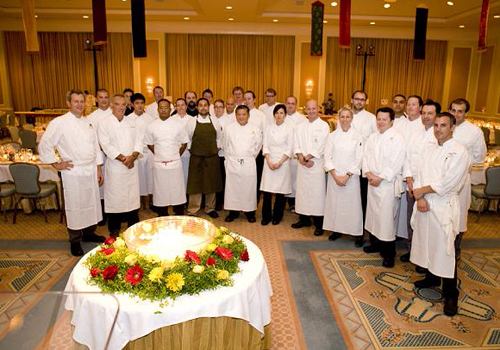
The Tenth Annual Taste & Tribute San Francisco benefit gala for the Tibetan Aid Project will grace the ballroom of the Four Seasons Hotel San Francisco on Friday, November 19, 2010. Featuring twenty-four of the best Bay Area chefs, Taste & Tribute San Francisco gives 220 guests the rare opportunity to watch the tableside creation of a gourmet, four-course meal by culinary masters. Chefs work in pairs to create a unique dining experience for eleven different tables. Proceeds support the Tibetan Aid Project’s efforts to rebuild and protect the endangered spiritual heritage of Tibet. Tickets are $350 per person.
 
This is the principal fundraiser for the 2011 World Peace Ceremony in Bodhgaya, and the most important sponsorship event of the season.

Stumble Upon Toolbar

Thursday, November 11, 2010

Thank You to Veterans

When we consider the great benefits this country has afforded to Tibetan Buddhist teachers and institutions, it is important to recognize the men and women who dedicated their lives to defense and preservation of the freedoms that make it possible.

On Veteran's Day, 2010, we extend our deepest respect and gratitude.

Dharma is again heard in Afghanistan, thanks to a joint effort

Stumble Upon Toolbar

Crestone Sangha Asks for Emergency Help

The United States Air Force is proposing to use the mountains around Crestone, Colorado as practice air space for the action they are waging in Afghanistan, against the extremists who have destroyed Buddhist monuments and murdered Buddhist practitioners. 

This training mission is called LATN (Low Altitude Technical Navigation).  

The Crestone sangha is requesting all of us to send an email to the Air Force, strongly urging them to not allow the LATN program to fly over the San Luis Valley,  which is home to their retreat center, Samten Ling.  If allowed to proceed, pilots would fly low altitude night sorties, 5 hours in duration each, half of that at extremely low altitude, i.e. around 200 feet. The sangha is primarily concerned about the noise, and the potential for a devastating wildfire should one of the aircraft crash. We should also note there are important stupas in the area.

This is obviously a complex issue, and as the deadline for comments is apparently November 15th, quick response is indicated.

If you are interested in responding to Crestone's request for help, complete details are available by clicking this link. We hope that in addition to everything else they are doing, the folks in Crestone will try to avoid taking an adversarial posture, and instead enter into a useful dialogue with the Air Force. We think once they do, many of their fears will be appropriately addressed. 


Those LATN training missions fly over here all the time, and we do not find them disruptive. Granted, we do not have the wildfire threat potential they have in Colorado. That aspect definitely needs to be sorted out, as these missions are not without substantial risk. Perhaps the Air Force will be able to supply firefighting equipment or capabilities to the retreat center, as they have done in other situations around the world.

Nevertheless, when we hear those aircraft, we think we are hearing the sound of freedom. If you say, "Oh! Those are war machines!" you are of course correct, but every Buddhist nation in history has raised, trained, and supported a military capability with "war machines." It is a fact of life, and either we approach it with equanimity, or we permit ourselves to get dragged down into "taking sides."

The Dalai Lama is on record acknowledging, and even supporting, the worth of a strong military capability, and I suppose we need to take that into account before we assume a contrary position.

Of course, I have my own Air Force, so maybe I am prejudiced....Victory Through Hare Power, and all that.


Stumble Upon Toolbar

Wednesday, November 10, 2010

Poisons and Pathogens: Origins of Disease


Someone, with whom I have a polite connection, has been struck down by a particularly insidious form of encephalitis, and that is weighing on my mind. As she is over eighty years of age, the matter is quite serious. She has been in the intensive care unit for over a week now, and only today has she been able to breathe on her own. Although there was early intervention, she stands a better than fifty percent chance of permanent impairment, and certainly, a significant impact to quality of life -- if, and only if, she manages to survive at all.

So, you know, I am saying prayers for her.

When her family first informed me of the diagnosis, it caused me to recall a disturbing book I first read seven years ago: The New Killer Diseases, by Elinor Levy and Mark Fischetti. Of course, this book, in turn, caused me to recall Desi Rinpoche's foretelling of such diseases, back in the time of the Fifth Dalai Lama.

Regardless, it may surprise you to learn that encephalitis is often caused by herpes, and in such cases, mortality runs around seventy percent.

Herpes? The sexually transmitted "cold sore" disease? 
 
Well... yes and no.

Actually, herpes is a family of viruses, referred to as herpes 1 through 8 -- maybe it is up to 9 or 10 by this writing -- that, from a Western medical perspective, was first recorded in ancient Greece, and now afflicts more than ninety percent of the world's population. That is correct -- over ninety percent of all adults in the world have at least one form of the herpes virus already in their system.

When you study this disease -- how it is transmitted -- which is not always or exclusively sexual -- and how it actually operates once transmitted -- and when you learn about its diversity, you begin to think you are reading science fiction. You begin to think it is an alien life form, sent to wipe out planet earth. Indeed, researchers at the Harvard Medical School believe that "herpes is so advanced it understands the human immune system better than we do," so when they want to study the human immune system, they study herpes.

The classical Tibetan explanation for herpes goes something like this: a couple had sex beneath a tree, and so offended a spirit that happened to be in the tree, that the spirit caused this infection to reach all of mankind.

Modern scientists do not like such explanations, but they offer little in the way of alternative. Even modern Tibetan doctors tend to discredit such explanations, and seem ashamed of them.

So, where do diseases begin? Well... apart from desire, anger, and delusion, that is.....

In order to explore the various hypotheses, it is necessary to return to the time of Homo habilis—almost two million years ago—when there are no doctors and small medicines, and then work our way forward. We of course do not know everything about prehistory, but archaeology and anthropology have offered a few clues about the most recent prehistoric era, and we are free to extrapolate from the foundation these provide.

Primitive man’s first struggle is sustenance. He must eat, and it is likely his pangs of hunger occur two or more times daily, as ours do. Old bones—human and otherwise—have something to tell us about what he eats. We find that man almost immediately becomes carnivorous, and starts consuming his own and other species.[1] This begins in moderation. Plants do not escape in fear or fight back when cornered, but animals and other humans do. The early diet is thus vegetarian to the greater percentage, with the lesser percentage being flesh. Around 1,700,000 to 1,500,000 years ago, in the period of Homo erectus, we find evidence of the systematic use of fire for cooking. This is surely an important—and probably the first—medical development, as it changes man’s diet and hence, his constitution, for evermore.

We speculate that primitive man’s next struggle is with his environment. Looking back, it is likely that average life expectancy was subject more to the whim of stray storms, falling rocks, large birds, and peer aggression than to the etiology of disease. A palaeo-anthropological study that supports this likelihood comes to us from the Peking Man community. The study involves skeletal remains of some forty Homo sapiens. More than a third died at fourteen to fifteen years of age, with trauma—apparently both accidental and deliberate—being the principal cause of death.[2]

Thus, ancient man constantly forages about, snares the odd reptile or small mammal, occasionally dines on other ancients, and tries to avoid being injured in the process. As he does so, he thinks of his lot in life. He has but one source of information to apply to his mortal vicissitudes. To embrace this source means hope; to ignore it means disaster. This source is inflexible and absolute, yet it has a rich, infinite character, full of magical possibility. 
 
This source is nature, and nature is the divine instructor.

The divine instructor allows us to witness, but does not immediately explain. Any explanation comes from our contemplation of what we see. We explain what we understand and those things we cannot explain become magic. This becomes our learning and learning becomes our instinct—call this instinctive magic, if you like.

Some 2,000 years ago, an unknown Chinese author wrote, “When a person is born, there are two things that do not need to be learned: the first is to breathe and the second is to eat.”[3] As human beings begin to consider, from the very foundation, what they learn from what they witness in nature and then apply it to what they wonder about in themselves, the notion of primary power comes into being. This, in itself, seems a simple matter: what breathes, lives. That which does not breathe dies, so the first place to find this primary power is the air.

The study of air is a profound step in the ancient study of life, leading to the concept of air as both medicine and medical belief system. This, in turn, leads to the development of a diverse palette of cultivation techniques. Hence, the practices of “eating spirit vapor,” or breath absorption encountered in early China, the disciplining of the five winds in Buddhist yoga, or the pranayama of post-Buddhist Hatha Yoga.

Such techniques come to differ only in the matter of goal, or aim. The Chinese techniques, for example, are intended to prolong corporeal existence. In contrast, the Buddhist techniques are intended to transcend corporeal existence, thus: “Being the life force of sentient beings, what is called ‘wind’ performs all deeds; and as the vehicle of [perception] is five....”[4] As they are infrequently remarked in the literature, I will pause here and note the five winds of perception. These are the rgyu ba wind, based on the eye; rnam par rgyu ba wind, based on the ear; the yan dag par rgyu ba wind, based on the nose; the rab tu rgyu ba wind, based on the tongue, and the nes par rgyu ba wind, based on the torso.[5]

Consumption, the other thing that does not have to be learned, leads to the idea of food as medicine. On a rudimentary level, it is probable that ingestion of certain foodstuffs was rapidly observed to gain certain effects; further, that cooking such foodstuffs could alter or enhance said effects.

The early materia medica evolves by means both sacred and profane. By way of example, ancient Tibetan physicians discovered bcad sbyor, or the medicines learned from nature. Doctors would paint cracks on bird eggs, or paint cosmetic wounds on baby animals, and then observe what substances the deceived parents might bring to heal their offspring. There are twenty such medicines still in the pharmacopoeia, including saussurea medusa, primula, paeonia veitchii, paraquilegia microphylla, and pterocephalus hookeri.

Fire, food, air, and a cautious, observant lifestyle are thus probably the four corners of early medicine. Application of the human hand is probably the first medical treatment.

Around 4,000 years ago, someone in China had abdominal pain of such evident gravity that diviners were sent for. The record of their query, inscribed on bone, asks whether the pain can be successfully treated by pressing and rubbing, i.e. by massage.[6] More or less at the same time, give or take five centuries, a Sumerian in Nippur inscribed a clay tablet—the oldest received pharmacological literature in the world—with a prescription which called for “friction and rubbing.”[7] Around 3,000 years ago, the Greek poet Pindar wrote of the physician Asklepio’s healing patients by “spreading on their limbs ointments from far and near.”[8] In Historia naturalis, Pliny the Elder (23-79 CE) mentions that “unguents” are rightfully attributed to the Persians.[9] He then writes, “The first instance of the use of unguents that we have been able to meet with is that of the chest of perfumes which fell into the hands of Alexander…” This sets a date of the third century BCE. Pliny then describes a dozen principal formulae, including one that he calls “regal,” because it was compounded for the Parthian kings. The ingredients of this formula closely resemble that of an Ayurvedic formula, particularly in its use of Myrobalan.

Plainly, the laying on of hands was ancient man’s first response to somatic malady, and this for the simple reason that it worked. If it did not, the practice would not have survived the millennia and would not be seen in all quarters of the earth even to this day.

The other surviving traveler of time and distance is the why of fire, food, air, behavior, and human touch. In the age before microscopes and systematic introspection, this is the unseen dimension: the spirit world. From the earliest times, the spirits are called forth by sound: by incantation, drumming, and song. The vibrations of light are mixed together with the vibrations of sound, becoming spells, mantras, and prayers, and when combined with the other media become ritual. Hence, is medicine born, as ceremonial spawn from this world of magical possibility.

One notable ritual of which we speak is that of the shaman: arguably mankind’s first medical practitioner. The elements of shamanism, like the foundational elements of all early medical belief systems, are seen everywhere. These consist of symbolic death, dispersal and resurrection; an ability to fly to, and then fluently empathize with, the spirit world, whether in descent or ascent; a special relationship with fire, inclusive of autothermy; the ability to enlist the animal realm, either by assuming or usurping animal form, and the power of invisibility, i.e. mastery of the covert and clandestine.[10]

The age-old, worldwide phenomenon of shamanism—and we safely call it thus, for there is neither a recorded time nor place when it is not encountered—leads us to the idea of specially skilled people who, for one reason or another, are able to see what we cannot see and heal what we cannot heal. Thus, are doctors born, as adepts in the basis of survival, in worlds seen and unseen, able to do for us what we cannot easily do for ourselves. In the resulting attempts to emulate these special people, we find the origin of doctrine.

Doctrine is, perhaps, the very opposite of shamanic insight. Doctrine is linear, and sequential. Time, which is the basis of mortality and the shaman’s ground, is in contrast a series of self-replicating models, or what one commentator invokes as “creative repetitions of primordial archetypes.”[11] The sun rises, the sun sets. The moon waxes, the moon wanes. Night follows day and day follows night. People are born and people die. These things are happening everywhere, to all of us, and we share knowledge of them. We seem to be born into this shared experience as self-replicating models ourselves.

But, we stray from our topic. 
 
We have speculated about healing, but we should speculate equally about disease. Did men die of cancer two million years ago? What was the prevalence of heart disease? I used to delight in hearing my Tibetan teacher’s recollections of autocratic masters from the past. “They were unrelenting,” he told me. “They had bones in the heart! Really! When they were cremated people would find bones in their heart.”[12] Then I developed arteriosclerosis, and came to realize the origin of the personality type he described and the phenomenon of bones in the heart.

As a point of departure in the investigation of disease, I want to examine a healing practice from the Tibetan Bön tradition that dates to around 1017.[13]

The Bön religion is an ancient, pre-Buddhist, shamanic belief system of Tibet that came under strong Buddhist influence from about the seventh century. The Bön resource under examination comes from a time, some three centuries later, when such influence is evident. Still, it is useful in revealing something of the earlier Bön practices. The resource is the Srid-rgyal drag snags gnad kyi dgongs-thim [The Secret Text of the Primordial State (of the Goddess) which presents the Essential Points of the Fierce Mantra of Sidpa Gyalmo].

Sidpa Gyalmo, or the Queen of Existence, is a Bön guardian deity of the transmundane type, i.e. an emanation of the enlightened awareness and compassion of a great being, such as a Buddha. She has a complex iconography, and pantheon of manifestations, but is usefully summarized as a deep azure blue, wrathful deity who is pre-Buddhist in origin, and is a direct emanation of Shes-rab byams-ma, the Great Goddess. The latter is variously described as the Goddess of Wisdom and Love, or the Queen of the Waters.

As a mythological study, Sidpa Gyalmo may represent a West to East transmission, along the Silk Route, of a most ancient Mesopotamian goddess, possibly as old as 5,500 years, used by Ashipus, or Mesopotamian medical exorcists. In this regard, she may well be Gula, the Mesopotamian goddess of healing, known as the Great Physician, who flourished in the city of Isin. Equally, she may be the pre-Zoroastrian Iranian goddess of the waters Ardvi Sura Anahita, and in such case of later vintage, probably received in around the second century BCE. In either event, Bön iconography depicts her riding a mule, lending credence to the notion that she arrives in ancient Tibet from elsewhere.[14]

As a ritual issue, Sidpa Gyalmo’s practice is directed to healing infectious and contagious diseases. In the preliminaries, the practitioner commences with supplication to the deity, and then transforms into the deity. By means of divine fire, extraction of life force, dismemberment and consumption, the practitioner-deity eradicates the spirits of disease.

Next, a mantra is uttered numerous times, the deity is praised, and the origin of disease is considered. In general, disease is said to result as the consequence of fighting amongst corporeal beings. This, in turn, disgusts beneficent spirits, who desert them, and leads to attack by malicious spirits of water, wood, earth, and air, who plague them when the seasons change.

The causal considerations are pondered in detail, together with specific symptoms, and indications. For example: the practitioner listens to the sound of fresh spring water in his or her particular territory, and thereby discovers “the signs that originate prior” to the appearance of the infection. The practitioner also examines other signs in nature, such as the death of small mammals.

The body of the practice then commences with collection of pure water from an east-facing, valley spring in a clean earthen vase. One then bathes and makes earnest supplication to the Goddess, who is visualized as holding a vase containing medicine. She pours the medicine from her vase into the vase containing the spring water, after which the practitioner recites a mantra over the water, energizing it with sound.

The practitioner then effects a cure with this water by bathing the patient some six times during the day, all the while believing himself to be an emanation of the Goddess and uttering specific prayers.

The practitioner can also extend protection to an entire region by erecting specially prepared flags bearing the mantra, or by scattering clay images and pasting the mantra on door posts. Amulets are prescribed for personal protection and finally, the practitioner is advised to grind ten protective substances into powder and dissolve this in the consecrated water as a prophylactic against disease to a range of two miles.

The ten protective substances are listed as adonis vernalis, terminalia chebula, aconitum carmichaelii, sulfur, allium sativum, colchicum autumnale, ferula assa-foetida, saussurea lappa incense, musk, and crocus sativus.

From our study of the Bön resource, we learn that one dangerous, ancient problem was, plainly, dehydration arising from either influenza or heatstroke. This is indicated from the symptoms of the winter and spring maladies: “diarrhea, vomiting, shortness of breath, pains in the intestines, and heaviness of the head.” This is said to originate in result of cold, and imbalance in the wind humor. In the summer and autumn maladies, the symptoms are “pains in the heart and headaches which nearly break the head into pieces.” This is said to originate in result of heat.

Of greater immediate interest is what our resource reveals about the origin of disease, i.e. the result of disharmony among living beings. Far from being intended as social commentary, this is intended as a fundamental definition. If we stop and think about it, this is a good definition. The Bön text says, “Because of the evil actions of some sentient beings and the fierce fighting that ensued among them, their protective deities may have deserted them.”[15] This could encompass any somatic disorder you might care to name.

Apart from being a definition, this is also a pragmatic demonstration of completing cause and effect. Buddhism, ever concerned with the root of things, takes the issue of cause and effect to its very basis and determines that somatic disorder is fundamentally caused by desire, anger, and delusion: the three poisons. 

So, if this is the case, then from where do the pathogens take their "intelligence," or their organic ability to survive, and indeed resist death?

An interesting question, don't you think?

[1] There is informed speculation that the brains and marrow of women and teenagers were regularly consumed. See: Michael A. Cremo and Richard L Thompson, Forbidden Archeology: The Hidden History of the Human Race (Los Angeles: Bhaktivedanta Book Publishing Co., Inc., 1998), pp. 550-554, discussing the work of Franz Weidenreich with Choukoutien remains.


[2] State Administration of Traditional Chinese Medicine and Pharmacy, Advanced Textbook On Traditional Chinese Medicine and Pharmacology, Vol. I (Beijing: New World Press, 1995), p. 13.


[3] Anon., Tianxia Zhidao Tan [Discussion of the Culminant Way In Under-Heaven], in Donald J Harper, trans., Early Chinese Medical Literature: The Mawangdui Medical Manuscripts (London: Kegan Paul International, 1998), p. 432.


[4] Alex Wayman, Yoga of the Guhyasamajatantra: The Arcane Lore of Forty Verses (Delhi: Motilal Banarsidass, 1977), p. 198.


[5] Wayman, op. cit. pp. 252-253.


[6] Matthew Miller, “A Brief History of Chinese Therapeutic Massage.” http:// acupuncture.com/tuina/tuinahistory.htm (October 2002)


[7] Nancy Gordon, “Mesopotamian Medicine,” Ancient Healing: Unlocking the Mysteries of Health & Healing Through the Ages (Lincolnwood: Publications Intl., Ltd., 1997), p. 24.


[8] Ead., “Greek and Roman Medicine,” op. cit. p. 73.


[9] Book iii, Chapter 1.(1.) The Natural History of Exotic Trees and an Account of Unguents. Pliny was stating the first century case. Today we understand that the Persians received their formulae from the Indians several centuries prior.


[10] Mircea Eliade, Yoga: Immortality and Freedom. Bollingen Series lvi (Princeton: Princeton University Press, 1990), p. 320.


[11] Id. The Myth of the Eternal Return or, Cosmos and History. Bollingen Series xlvi (Princeton: Princeton University Press, 1954).


[12] Tarthang Tulku Rinpoche, c. 1968.


[13] John Myrdhin Reynolds, trans. The Healing Practice for Sidpa Gyalmo from the Bonpo Terma Tradition (San Diego: Vidyadhara Publications, 1996). I first became acquainted with John Reynolds 45 years ago, and know him to be among the most gifted, and woefully neglected, of the Tibetan translators this generation has produced. His work should be collected and sent to the mainstream, as it is truly impressive in its compass.


[14] I am captivated by the work of Jeannine Davis-Kimball, of the Center for the Study of Eurasian Nomads, in Berkeley, California. In particular, I am endlessly drawn to archaeological studies along the Silk Route that reveal the presence of women of evident high rank and magical occupation, some with decidedly Caucasian features, buried with numerous horses.


[15] Reynolds, op. cit., p. 16. Note that sentient beings encompass any being with a mind, such as hell beings, pretas, animals, insects, humans, titans, and gods.


Stumble Upon Toolbar